Where It All Began - Yahoo!, Google, AltaVista, Ask Jeeves & Others
I’m old enough to remember when the word Google was still a mysterious strange company with some new novel technology – a site that somehow indexes the internet and shows you links to random sites. It didn’t happen in a vacuum however, as back then it wasn’t just Google that sprung up, but many other search engines. During those days we would use different engines for different purposes. For instance, my favorite search engine for image search was AltaVista. For quirky unexpected answers I would ask Jeeves.
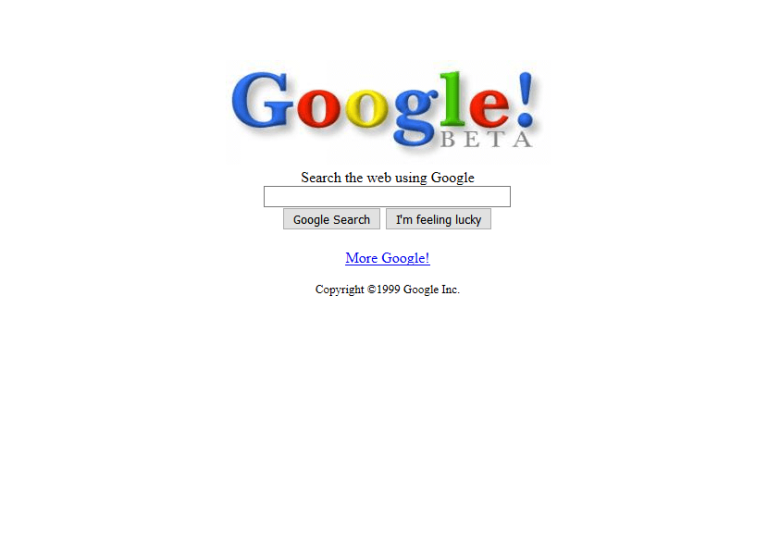
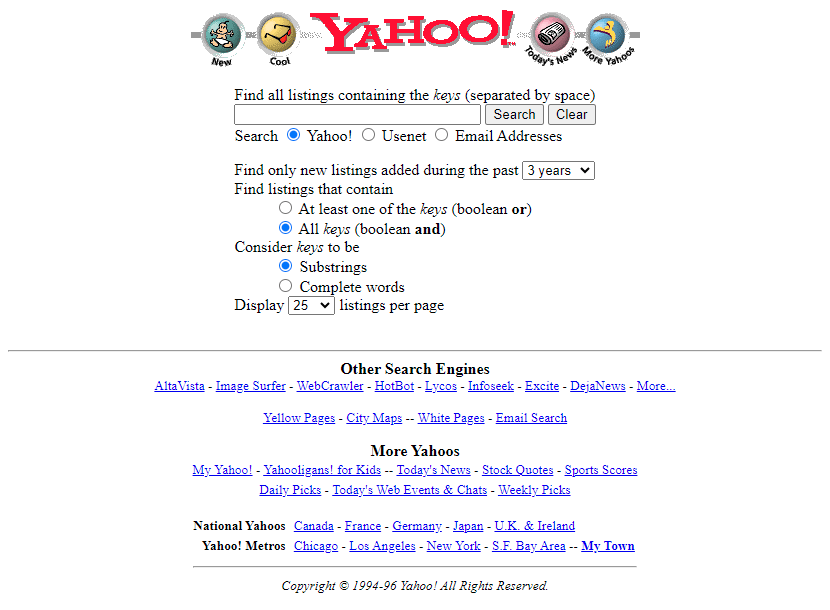
They all had interesting differentiation in experience where Google had the classic white background with single input field vs the massive homepage of Yahoo with all the links and articles. I actually made a bet that Yahoo would reign supreme with a computer geek friend of mine, who in turn picked Google.
No one could predict the future and with the novel nature of this technology and the onset of the internet as a whole how could you really? However it wasn’t lost on anyone, that Google, stood out from the pack. And while we had our fun with tools and applications the one thing that always remained was the sheer accuracy of Google. It had one job and it did it extremely well. The entire purpose of search engines was to match a user query/intent to a proper reference/citation in the form of a blue link. This requires very complicated algorithms to properly understand context of the user, their behavior, and then the content of the website.
Consider how many times you and a colleague were talking about the same thing, but couldn’t understand each other. Cultural, religious, technical, geographical, family-oriented and political differences meant we would all understand words differently. The power of search technology came down to this one performance – matching intent with outcomes. And this was only on the consumer end. The health of the actual business model came down to data centers, storage, bandwidth, regulatory and IP considerations as well.
"E Pluribus Unum" - All Hail King Google
It didn’t take that long for Google to solidify its position and “take-over” the market share. From the ‘noise’ of choice, experimentation and product differentiation came a single powerful workhorse that not only provided the best user results, but the backend ecosystem to power its growth.
Quick Stats:
- Google launched its search engine in 1997.
- Within a year of launching, Google held 60% of the search market.
- By 2000, Google had a dominant share of the market, especially after the introduction of AdWords.
- Google’s global search engine market share rarely dropped below 90% between 2010 and 2024.
It would take many years for another search engine to rival to any degree the hegemony of Google in the likes of Microsoft & Bing. To Bings credit it was able to snatch up to 20% of market share with its acquisition of Yahoo eventually, but that was the most damage it could do.
The Tech Is Cool, But How Did They Make Money?
While the technology was awesome to learn and tinker with, no one really stopped to ask how this free online tool makes money. As consumers you tend to pay for a product, there is an equal exchange. With technology startups, everything changed. As I began to study what eventually made Google one of the largest and most powerful companies in the entire world, it came down to advertising. Those little blue sponsored links which I never even noticed at first.

As I studied the business model I was hooked. Google created an entire ecosystem for the business world at large – a way to market their products & services right within the end users buy box. From here the terms like “lower-funnel” and “performance” marketing became a staple in the larger marketing & advertising world. Google Ads as it would be known, was for conversions. Each advertiser would use this Pay-Per-Click (PPC) model, where every time a user clicked on a sponsored link it would cost them an amount that the business setup within their Google advertising campaign. It was exceptionally brilliant for all parties involved.
Fast forward to today – advertising revenue makes up about 90% of Googles entire cashflow. Even if they have great server technology and services, even if they own Android & Chrome. Advertising is the massive one-trick, albeit, super powerful pony, that is what we know as Google or Alphabet. Yet, this is exactly the reason Google survived the 90s search engine game so well, and why it lasted up until today. Depth of product overshadowed the peripheral benefits of additional services and LOBs. Advertisers were and still are throwing money at Google every single day to get in front of their active core buyers, entire industries likely depend on this ecosystem to function correctly.
The New Gold Rush - Gemini, Grok, Claude, ChatGPT, Perplexity
Not A day goes by on Linkedin without some AE from a company like Salesforce posting about their first GPT! Imagine that, a salesperson built you a tool that can….do the same thing any basic free version of the existing platforms can. Cute.
They are learning via corporate online training programs and powerpoints, it’s the thought that counts. However this isn’t exactly a random meaningless development – it’s the new 90’s dotcom boom, but much more personalized now. AI tools and agents are integrating into everything we do, especially corporate. There are thousands and thousands of new AI agents being built daily for every possible task and purpose. Automation is certainly a major business use case, and any business not rapidly adopting better have a solid reason not to.
"Not A day goes by on Linkedin without some AE from a company like Salesforce posting about their first GPT!"
And yet, beyond the flashy “this bot can replace your entire 200 year old company” banners, our primary use of AI comes down to replacing our traditional way of searching for information online. Blue links got replaced with the actual answers behind the links. We shaved roughly 30 seconds off our search, but we also stopped questioning ‘WHY’ and ‘WHAT’ is being presented to us, with authority, without the ability to cross reference. The immediate adoption of AI and its information as the primary source of truth is astounding and frankly crazy. Anyone who understands how these things works also understands how they can be just as wrong as right. How the people behind the model can also tweak for certain narratives to shine vs others. That not using your own damn logic or intelligence is a sure road to hell.
This is the new world and it will change how we index and understand the internet, to the extend that the “Dead Internet Theory” is a real thing, underlying that the majority of the internets information will soon be completely AI generated, no real inspiration or human input. How can a human keep up with computers? If you’re reading this in 3025, welcome firstly, and secondly, yes, these are our trials and tribulations on earth as of now – hope whatever we’ve become isn’t too terribly bad. Anyways…where was I?
Gemini, Claude, Grok, ChatGPT, Meta AI, Perplexity etc….do you notice something repeating? Perhaps a recycling of a previous eras timeline in the likes of the early 90’s, with dozens of engines competing for your searches? We’re precisely in that moment, the moment where incredible capital is flowing into building and testing, and where at some particular point a new king is to be born. We don’t have enough bandwidth to use all of these models in our lives, its too clumsy, and in fact, the differentiation is quickly dissolving. Sure Claude used to be able to code very very well – but Grok can outcode it now, and its already integrated into X, a social platform that isn’t going anywhere. And yes, OpenAI + ChatGPT were the first big ones to do it and ushered in this wide adoption of technology, but so didn’t Yahoo! kick off the search engine game only to be overshadowed by….Google.
All Hail King Goo....Gemini?
One company stands out in todays AI landscape on a key metric that almost none of the other players have: wide advertiser adoption. Google is a fundamental company, not a new edge case. And as someone who’s been in the Search Marketing game for over 10 years, we’ve been using algo’s to target users and optimize our bidding strategies. In fact if you were not running a CPA or ROAS campaign, were you even a serious person? CPA & ROAS campaigns are able to educate the algorithm on user behaviors and key identifiers that align to meeting an end advertisers margin goal. In simple terms, Google has a very clear understanding which user in its ecosystem is showing upper, mid & lower funnel behaviors across their entire online journey. It knows when & what ad to show to that one specific click to drive the outcome.
The result is 3 fold:
- End user gets what they needed/wanted
- Advertiser makes the sale
- Google earns the click revenue
This trinity of positive outcomes ensures wide adoption from the consumer base, growth to advertisers, and money in the pockets of the company. This fuels further growth & development. What AI company today can achieve this accurately & properly? OpenAI is teasing the product recommendation feature, where advertisers can show their products directly in the feed. This is obviously a need at this point for OpenAI, to create revenue.
They can either sell the subscription and increase the pricing for API use or they can onboard advertisers. Regardless of which route is taken, Google has the clear and obvious lead in using Gemini to further expand the reach of its AI Overviews to incorporate Google Ads. It already understands the users via Chrome and other behaviors. With a few updates to the SERP, the entire experience will not only surpass what you get from long text prompts via Grok or ChatGPT, it will be much better at matching user intent and providing accurate information.
OpenAI on the other hand is tied to Bing Ads, which is a great secondary tool for advertisers still struggles to provide the same sheer accuracy and performance for advertisers that Google does. The most exciting element to watch here is how much Microsofts impact and existing product feeds can supercharge OpenAIs direct to consumer workflows. This would be a massive win for Microsoft, as it would make Microsoft Ads way more prominent of a platform.
How Do We Use Different AI Models?
As a full service marketing agency we rely on many AI tools to enhance and boost our customers bottom line. As things stand today we rely on many different models based on our needs. Some of the biggest areas that have added incredible value is the image & video generation capacity with tools like Veo & Runway. Secondly being able to develop edge case code for WordPress applications and otherwise has been a huge help. Lastly connecting the dots with robust data flows via OpenAIs API has opened up new opportunities entirely.

Most Impressive: VEO & Video Creation.
Compared against Runway & other video generation tools Gemini Veo is superior out of the box creative solution.

Most Impressive: Communication Style & Accessibility.
We love how Grok is an add on to the platform X, making access to it fairly straight-forward and simple. Its plug and play and has additional features that enhance the app experience.

Most Impressive: API Connections & Integrations
OpenAi is our go to for API & integrations largely for their many different models to choose from based on use case and the very easy navigation and billing interface to control bandwidth.

Most Impressive: Coding & Development
Diving into the foray of vibe coding and AI based development, Claude 3.5 was our go to solution and did in fact outperform early versions of Grok in putting together stable code.